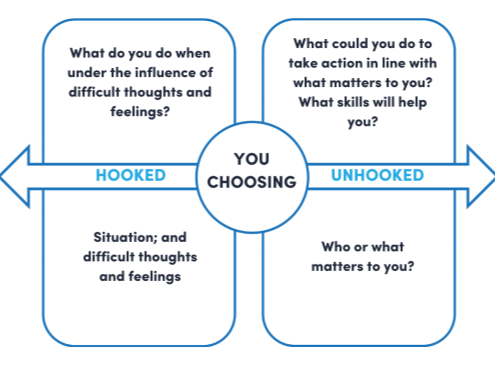
The ACT Matrix, based on Acceptance and Commitment Therapy (ACT), is a powerful tool for achieving goals. Its simple yet effective approach can be applied in various settings, from therapy to personal development. By understanding its principles and four quadrants, individuals gain clarity, direction, and a framework for values‐based action.
Understanding the ACT Matrix
Developed by Polk, Schoendorff, and Webster, and published by Context Press, the ACT Matrix visually represents the six core processes of ACT: acceptance, defusion, self‐as‐context, present moment, values, and committed action. This framework helps individuals identify and overcome barriers to achieving their goals while fostering psychological flexibility.
The Four Quadrants
The ACT Matrix is divided into four quadrants, each representing different aspects of behavior and experience:
- Moving Toward: Behaviors that align with values and goals (e.g., exercising, engaging in professional development).
- Moving Away: Behaviors that hinder progress towards values and goals (e.g., procrastination, avoidance).
- Inner Experience: Thoughts, feelings, and internal experiences (e.g., self‐doubt, anxiety, emotions).
- Committed Action: Actions taken in alignment with values, regardless of internal or external challenges (e.g., self‐care, mindfulness).
The "self‐as‐context" perspective, located at the center of the matrix, encourages individuals to observe their experiences without judgment, enabling greater psychological flexibility.
The ACT Matrix in Practice: Finding Your Purpose as a BCBA
To apply the ACT Matrix in your professional journey, consider the following steps:
- Lower Right (Values): Identify your core values as a BCBA (e.g., supporting others, fostering growth).
- Lower Left (Obstacles): Recognize internal barriers that hinder your values (e.g., fear of failure, self‐doubt).
- Upper Left (Away Moves): Identify avoidance behaviors (e.g., procrastination, excessive distractions).
- Upper Right (Toward Moves): List actions that align with your values (e.g., enrolling in training, seeking mentorship).
Reflecting on these quadrants can help you make intentional, value‐driven decisions that promote professional and personal fulfillment.
Why BCBAs Need the ACT Matrix
BCBAs often face challenges like corporate pressures, insurance denials, and unreasonable demands, which can lead to career dissatisfaction. The ACT Matrix provides a structured way to clarify values and develop actionable plans, empowering professionals to make fulfilling choices.
Using the ACT Matrix for Goal Setting
The ACT Matrix can also help in setting and achieving goals:
- Identify Values: Clarify what truly matters in your life and work.
- Plot Behaviors: Categorize actions into acceptance, commitment, change, and their impact on others.
- Create a Plan: Develop SMART goals, outline actionable steps, and set timelines that align with your values.
Benefits in Therapy
In therapeutic settings, the ACT Matrix enhances psychological flexibility, helps manage anxiety and depression, and fosters mindfulness and compassion. It encourages individuals to approach challenges with a values‐driven mindset.
Applications Beyond Therapy
Beyond therapy, the ACT Matrix can improve personal relationships by enhancing emotional awareness and communication. In professional environments, it supports collaboration, reduces conflict, and helps achieve shared goals.
Challenges and Considerations
While powerful, the ACT Matrix may present challenges:
- Difficulty Understanding: Supplement with resources like PDFs or videos to clarify concepts.
- Stress: Combine the matrix with stress‐reduction techniques.
- Sorting Thoughts and Feelings: Seek support from a therapist or coach trained in ACT.
Conclusion
By leveraging the ACT Matrix, individuals can clarify values, overcome obstacles, and take intentional steps toward a fulfilling and meaningful life. Whether applied in therapy, work, or personal development, this tool empowers users to align actions with their deepest values.